

Tree Care Doesn’t Hibernate: Winter Tree Myths, Answered
When winter hits Omaha, most homeowners assume tree care goes on pause. Snow on the ground, frozen soil, bare branches — it feels like a season of waiting.
In reality, winter is one of the best times of year to care for your trees.
At American Arborist, we’re often asked whether trees should be touched once the temperature drops. The answer is simple: tree care doesn’t hibernate. In fact, winter offers unique advantages that make it a smart season for pruning, removals, and overall tree health management.
Below, we answer the most common winter tree questions we hear from homeowners every year.
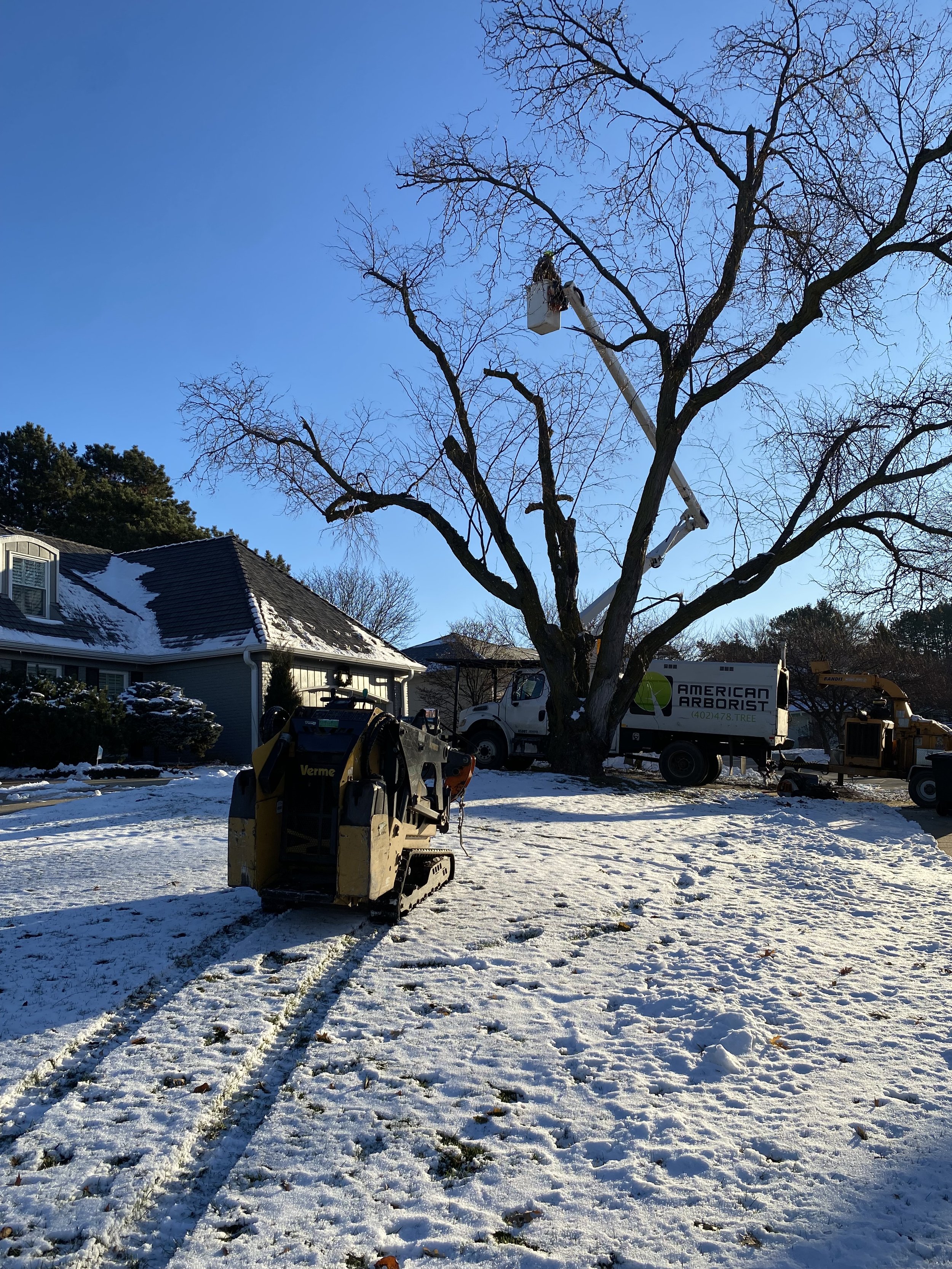
Frozen ground minimizes lawn damage.
Do arborists even work in winter?
Yes — winter is one of our busiest and most effective seasons.
Trees enter dormancy in cold weather, which makes it a safe time for pruning and structural work. With leaves gone, trained eyes can more easily identify potential problems such as disease, dead limbs, cracks, and hidden decay.
Cold weather also brings fewer pests and less disease transmission, making winter an ideal environment for precise, preventative tree care.
Will tree work damage my lawn when the ground is frozen?
Actually… frozen ground is easier on your yard.
Winter soils are firm, which means less rutting and turf damage than during wet spring months or soft summer conditions. Frozen ground helps lawn surfaces hold up better under equipment and foot traffic.
In many cases, winter work results in less disturbance to your lawn than warmer seasons.
Do you use protective mats?
Yes, whenever conditions call for them.
When working on properties with sensitive turf, slopes, or soft areas, we use boards and mats to protect grass and underlying soil from compression. Lawn protection is part of professional tree service — not an add-on.
Federal frost doesn’t eliminate the need for care. We treat every property like we’d want ours treated.
How can you tell if a tree is dead without leaves?
Winter often tells the truth better than any other season.
Without leaves on the canopy, arborists can clearly spot:
dead or dying limbs
bark damage
split trunks
fungal growth
insect evidence
structural flaws
The absence of leaves makes hidden weaknesses visible. This is one of the reasons winter inspections are often more accurate than inspections in full foliage.
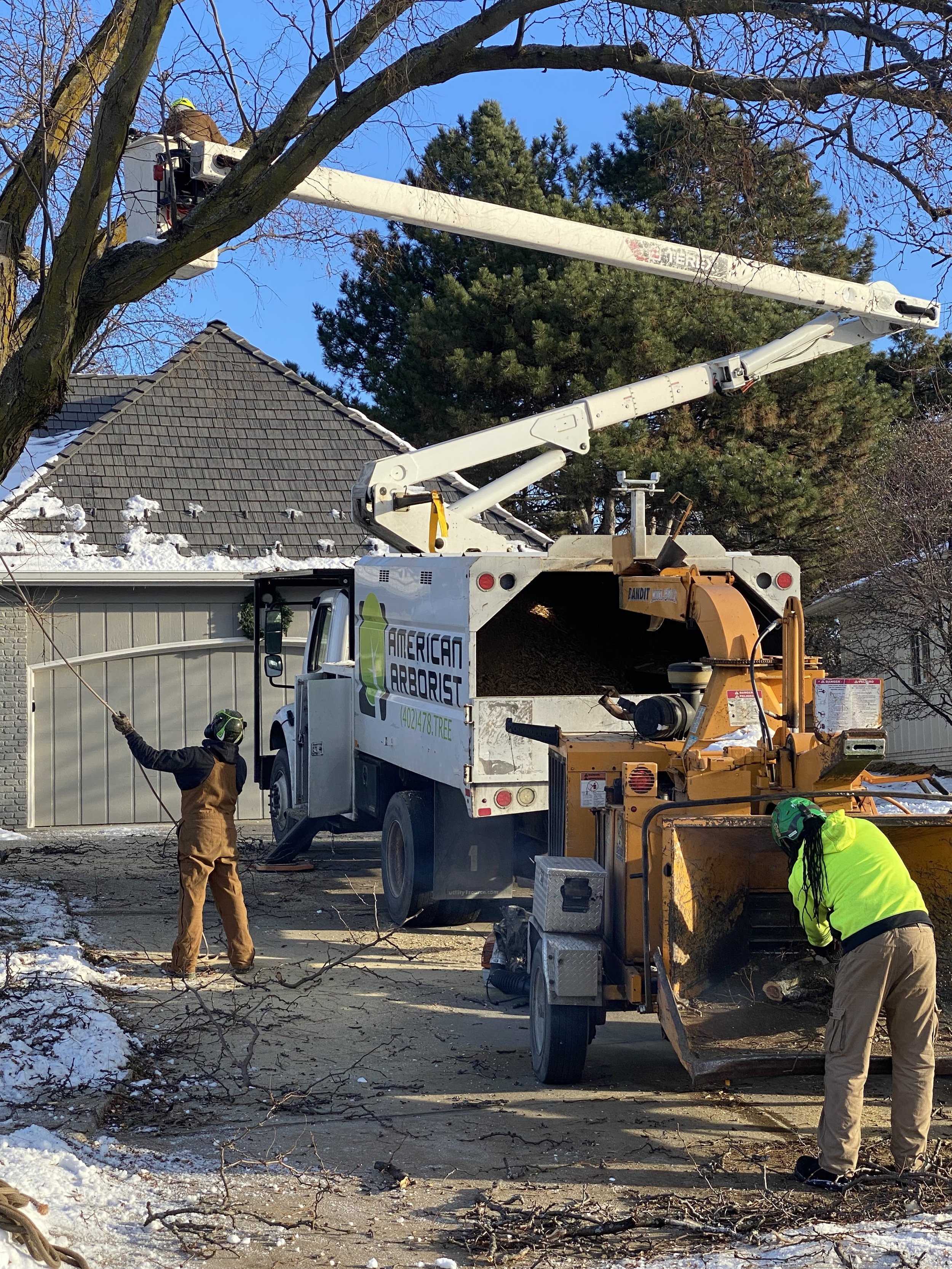
Why we like winter tree removals–No leaf clean up!
How do you work with snow on the ground?
Snow does not stop tree work.
When needed, we shovel access areas around the trunk and work zone. Frozen soil often provides better footing and equipment stability than muddy spring yards.
As long as conditions are safe, tree removals, pruning, and evaluations continue year-round.
Is winter a good time for pruning?
Yes — and in many cases, it’s the best time.
Winter pruning:
reduces the risk of disease
prevents insect interference
allows for cleaner cuts
improves spring growth
makes structure easier to shape
When trees are dormant, they can handle trimming with less stress. Cuts made in winter are naturally sealed when growth resumes in warmer weather.
Is winter tree work dangerous?
Not necessarily — and often, it’s safer.
Winter typically provides:
better visibility (no foliage)
firmer working surfaces
fewer pests
cooler temperatures for safer labor
more predictable conditions
Tree work is dangerous year-round and always handled cautiously — but winter adds several safety advantages.
Will cold temperatures damage freshly cut branches?
No. Proper pruning does not harm trees in winter.
In fact, the lack of active insects helps protect cuts from infestation. Trees naturally compartmentalize wounds and seal off pruning sites when growing season returns.
When done correctly, winter cuts support long-term health — not damage.
Why not just wait until spring?
Because winter damage doesn’t wait.
Snow, ice, and wind can worsen cracks, stress weak limbs, and accelerate decay. Waiting for warm weather often turns minor problems into emergency calls.
Preventative care now costs less — and protects more — than reactive care later.
What about cleanup in winter?
Snow doesn’t change our standards.
We still:
chip debris
haul material
rake and clear work areas
leave your property clean
Cold weather does not excuse sloppy finishes. Professional work is professional year-round.
The Bottom Line: Winter is Tree Season
Winter isn’t the off-season for your trees — it’s the smart season.
From pruning and inspections to removals and storm prep, winter offers a clear, safe window to take care of trees before problems grow.
If you’ve been waiting for spring, you may already be late.
Ready to talk winter tree care?
American Arborist serves Omaha and surrounding communities with year-round professional tree services.
Cold weather. Smart care.
Tree work doesn’t hibernate.